Journey blew me away. There’s no dialogue; the world is alien; the few murals you find along the way are evocative but ambiguous. In the end, the game is revealed as a metaphor for the circle of life as you’re sent to start your journey over and over again until you finally reach perfection, struggling against the trials life brings you.
Journey was the first I played; Flow and Flower were previous games by ThatGameCompany. In Flow, you were a small creature getting larger by eating other creatures; in Flower, you played as the wind, carrying flower petals through fields and cities. Other game developers took up the torch; In Abzû, you play a diver exploring endless seas and eventually saving them; in The Pathless, you played as a child saving animal deities from the great evil that was using them to destroy the world.
All wordless, diegetic games where the story is told, not by words, but by what you see and what you experience.
It was a little bit funny to see the page after page of translation companies in the end credits. I guess someone had to translate… the end credits, after all. As well as the minimal instructions on how to use the controls.
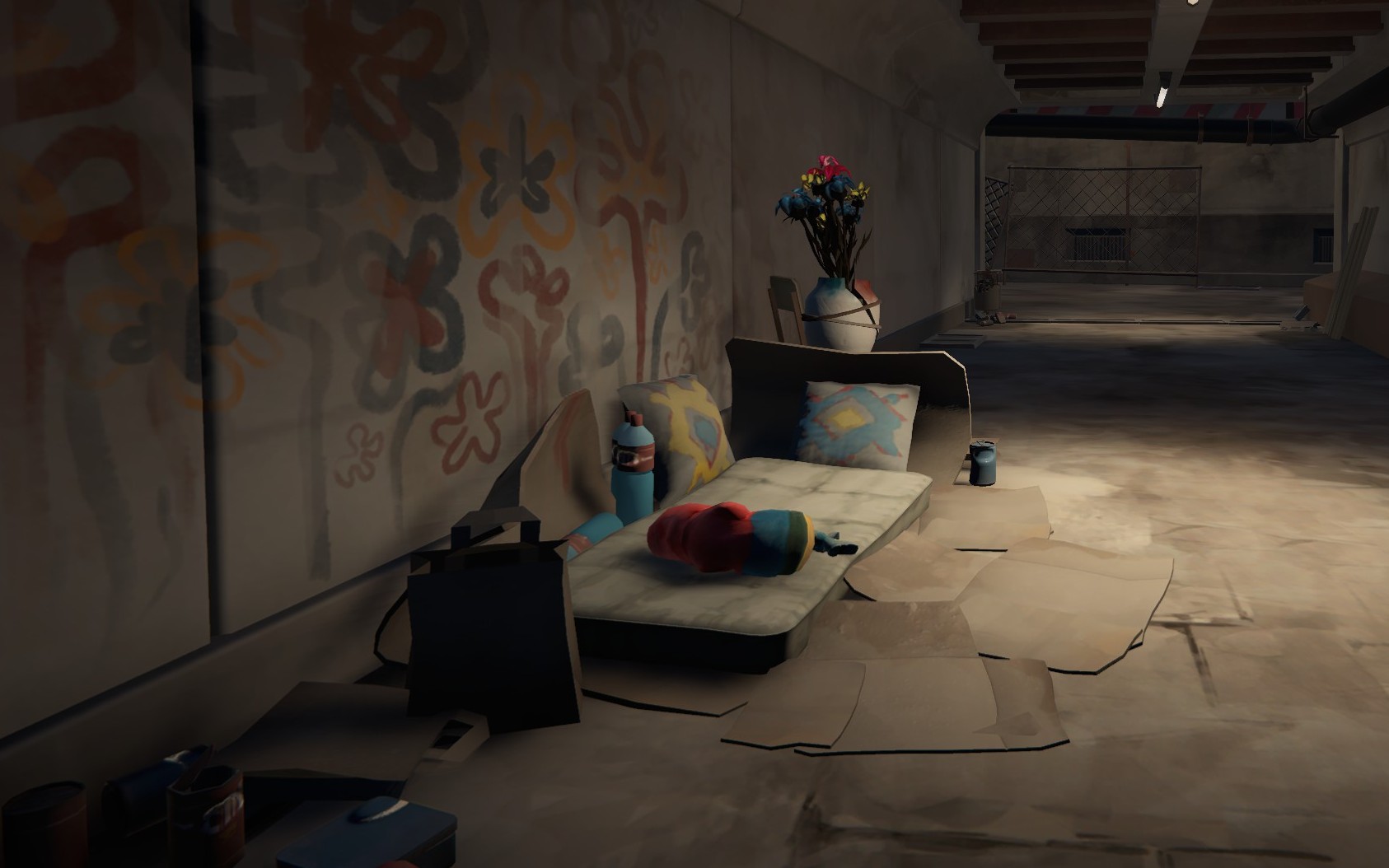
You play as a homeless child living in an underpass who is awakened one night by strange sounds coming from outside. You find a large, shaggy, antlered creature called a Calicorn that has gotten its snout stuck in a bucket. You free it using a stick and befriend it. It immediately heads off to free what turns out to be another Calicorn, as you learn to guide it with your stick that has grown red leaves. Along the way, you and the Calicorn stop by a mural of the world outside the city.
You soon find a third Calicorn and guide them out of the city, where your attention is pulled to the top of a far mountain range, where giant monoliths are set.
“Journey,” I muttered when I saw this. It wouldn’t be the last time this game copied its clear inspiration.
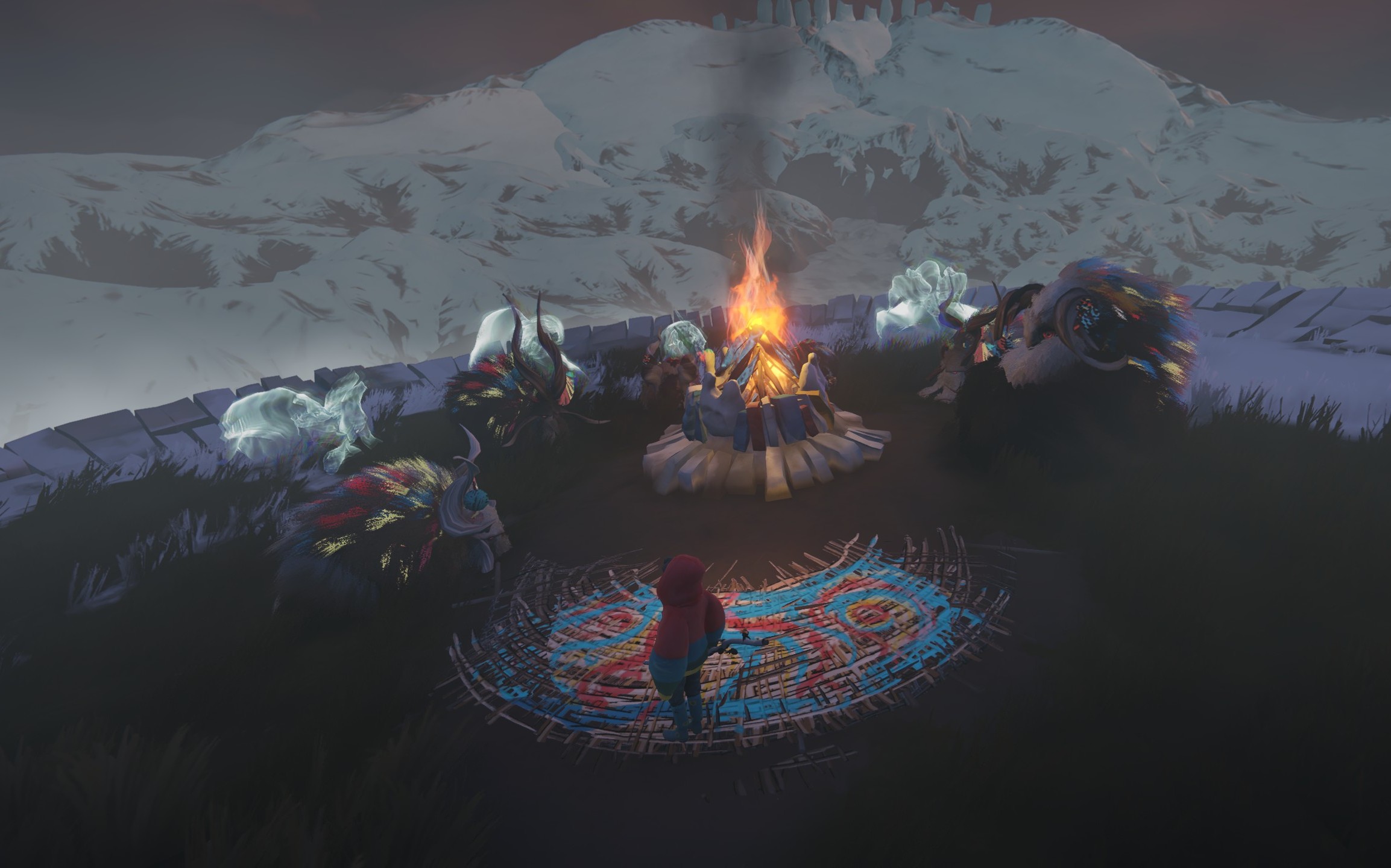
In Journey, you traveled alone, or with a nameless companion — another actual player on the same Journey. In Herdling, you’re accompanied only by your ever-growing herd of Calicorns. You can find up to ten, but the more Calicorns in your herd, the harder it is to control them and keep them healthy.
There are dangers in this world. Treacherous ice, steep cliffs, starvation, thorny bushes… and the birds. Giant birds with owl-like heads, and their favorite food is fresh Calicorn on the hoof. It is very possible to lose Calicorns to any one of these dangers. You’ll have to keep them safe, clean, fed, and emotionally secure. You can name each one, and this makes it harder when you lose one.
Sometimes the spirits of the dead Calicorns will show, especially when it is dark and the herd is resting, but also at other times, perhaps to lead you to another lost Calicorn. When you sleep, your dreams are haunted by a large herd of Calicorns being guided by a tall, ghostly spirit with a scythe-like pole festooned with flowers.
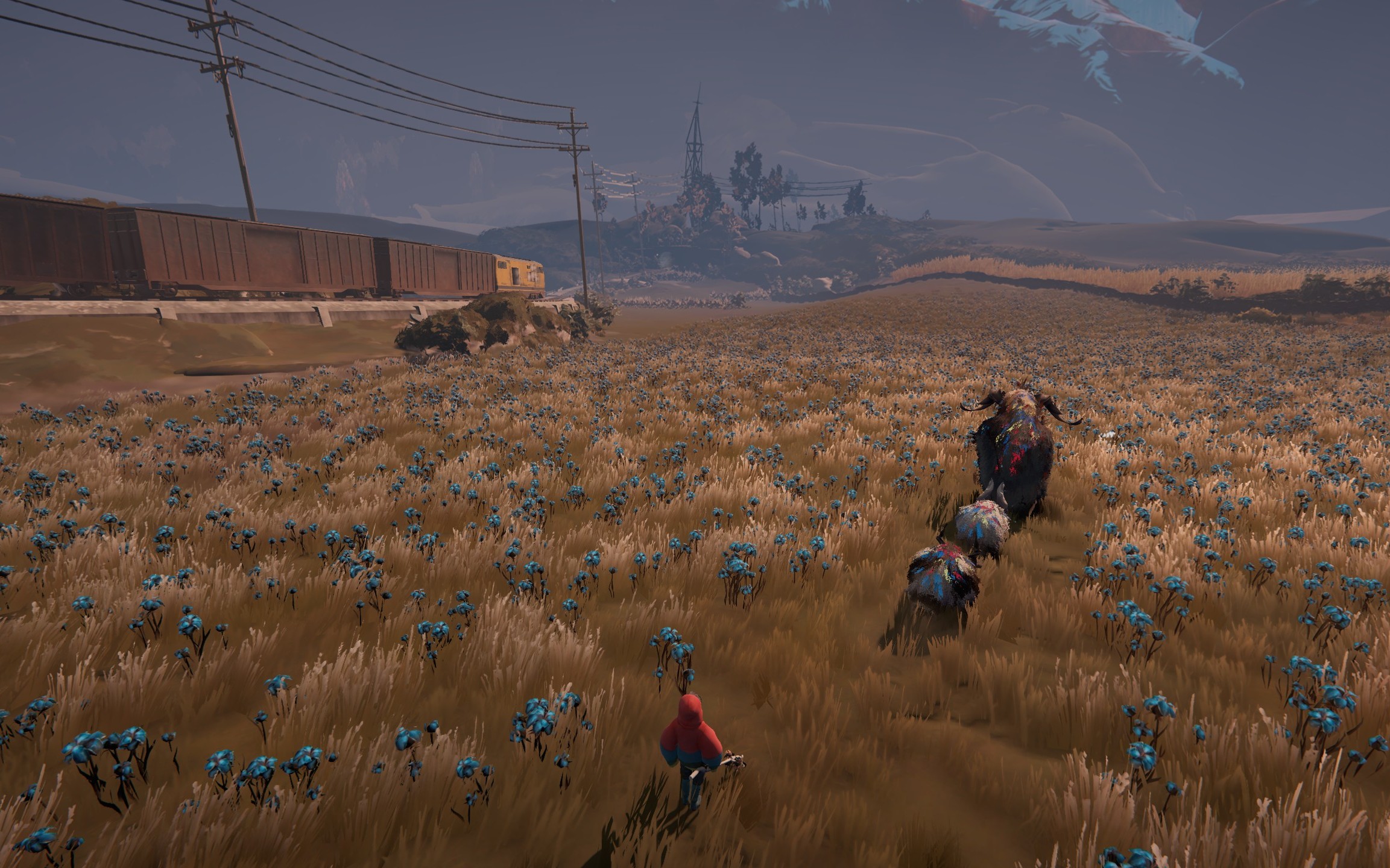
Calicorn can power up by running through fields of flowers that color their coats; doing so powers up their “stampede”, which lets them run very quickly and escape dangers such as birds and high winds, or just to move along a little faster through the story, or to give a little extra oomph to climb steep rises. Occasionally, you’ll come across shrines that you use to make more flower fields. You’ll also find faded murals that you and your Calicorns can activate to bring them to life and usually to open a path forward. Other paths can be opened by you and your Calicorns working together to open a gate, or push a rock.
The environmental puzzles can be occasionally tricky, most especially those that have to be solved while being attacked by birds. The achievement list implies it is possible to make it through the game without losing any Calicorns, but one particular killing field lost me two of them while I was frantically trying to figure out what to do. Eventually, you do come to an alliance with the birds, presumably because they are now very well fed on your herd.
The game is short; I finished it in a single sitting, though I should play it again and try not to lose any of the Calicorns this time and save them from a few other dangers, now that I know they exist. It’s also very linear. I doubt there’s any part of the game I didn’t see. You won’t find yourself replaying Herdling very often.
But, that said, I very much enjoyed my few hours with the game. Having to care for critters with minds of their own and no sense of self-preservation very much reminded me of raising my own children, and the eventual destination was very much worth reaching.
Something special awaits you if you watch through the credits after completing the game, so keep an eye out for it.