“With Amazon’s New World MMO shuttering, can a simple board game provide a new home for its players?”
What kind of question is that? They’re nothing alike. I don’t think anyone who didn’t back the Kickstarter can even get DragonStrike. You’re being weird, asking weird questions. Don’t be weird.
But, since you brought DragonStrike up, let’s talk about it.
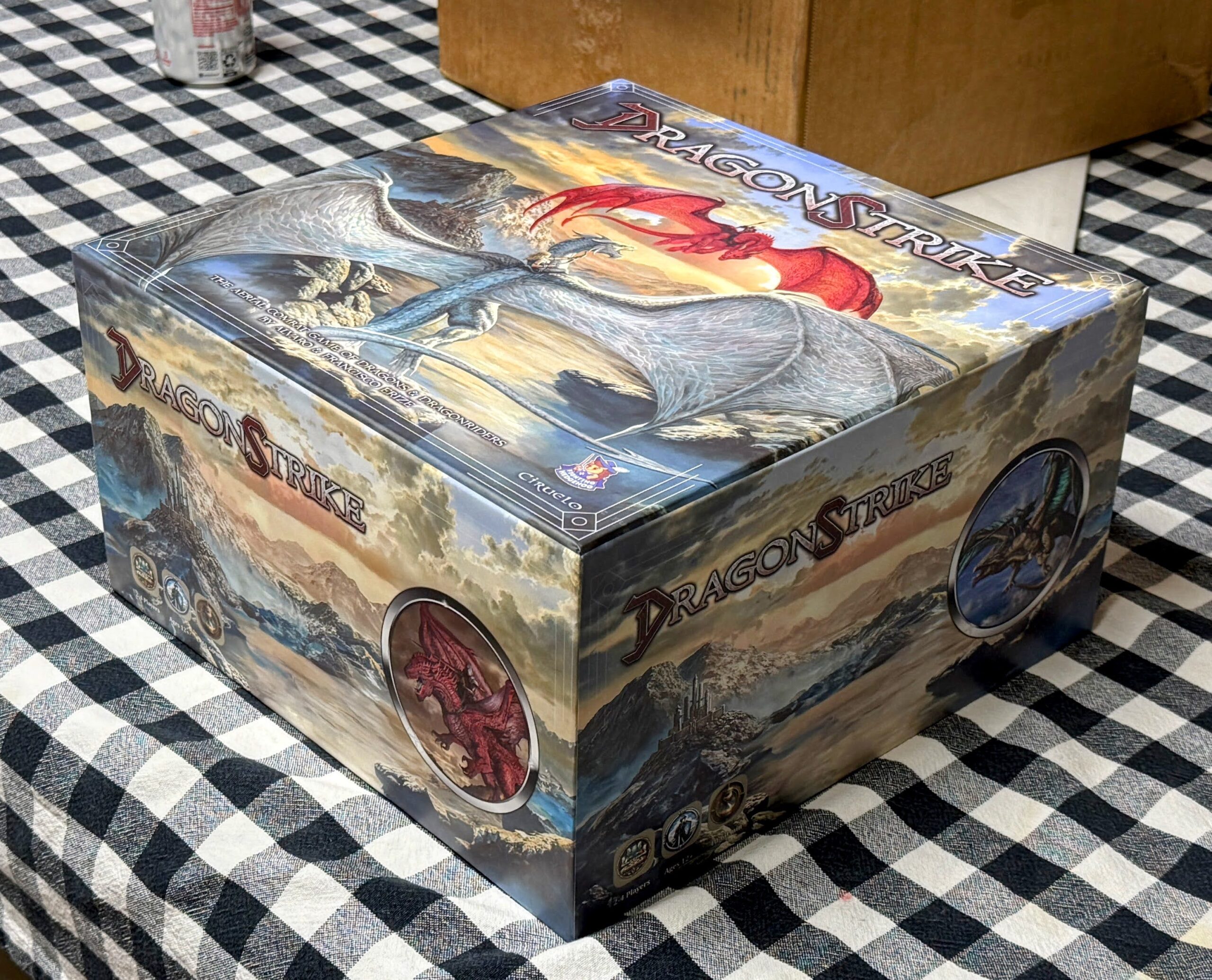
Back in the olden days, DragonLance was the big thing in Dungeons & Dragons. The famous Weis & Hickman books set the stage; the rule books let you loose in it. There were DragonLance comics, a DragonLance cartoon, and DragonLance RPGs (the famous SSI “Gold Box” games), and… DragonStrike, the dragon combat simulator.
In the computer game, you play a young dragon knight who has just embarked on their first combat as a Knight of the Lance. You start, I believe, with a lowly copper dragon, but as you grow in skill, you are partnered with ever more powerful dragons.
The story is told in cutscenes that places the action within the War of the Lance, as described in the books. The main gameplay, though, will be instantly familiar to anyone who’s played a dogfighting flight simulator. You’re on a dragon, and through dragon breath and lance, you’re going to clear the skies, sink ships and destroy enemy camps. Similar to Wing Commander, the story branches depending on whether you win or lose certain missions, with the success of the war very much dependent on you.
I loved this game so much that I bought it twice. It came on two floppies, a start disk and a data disk, and I somehow lost one of the disks, and so I bought it again. The graphics are crude; I played it recently on an Amiga 500 emulator and it just wasn’t happening for me. But back then, the graphics were amazing.
I backed the board game the moment I heard about it, and so now I’ve bought it a third time.
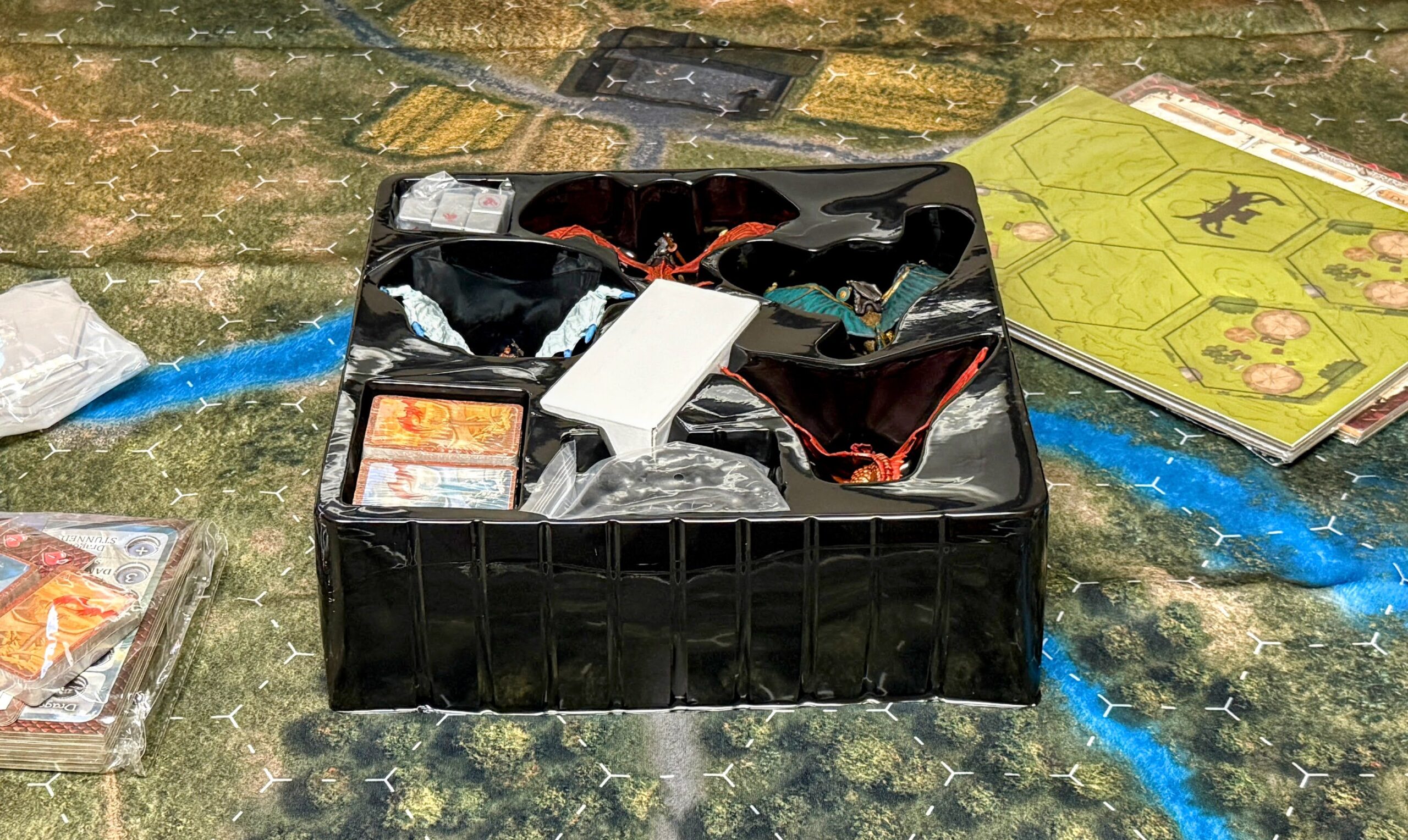
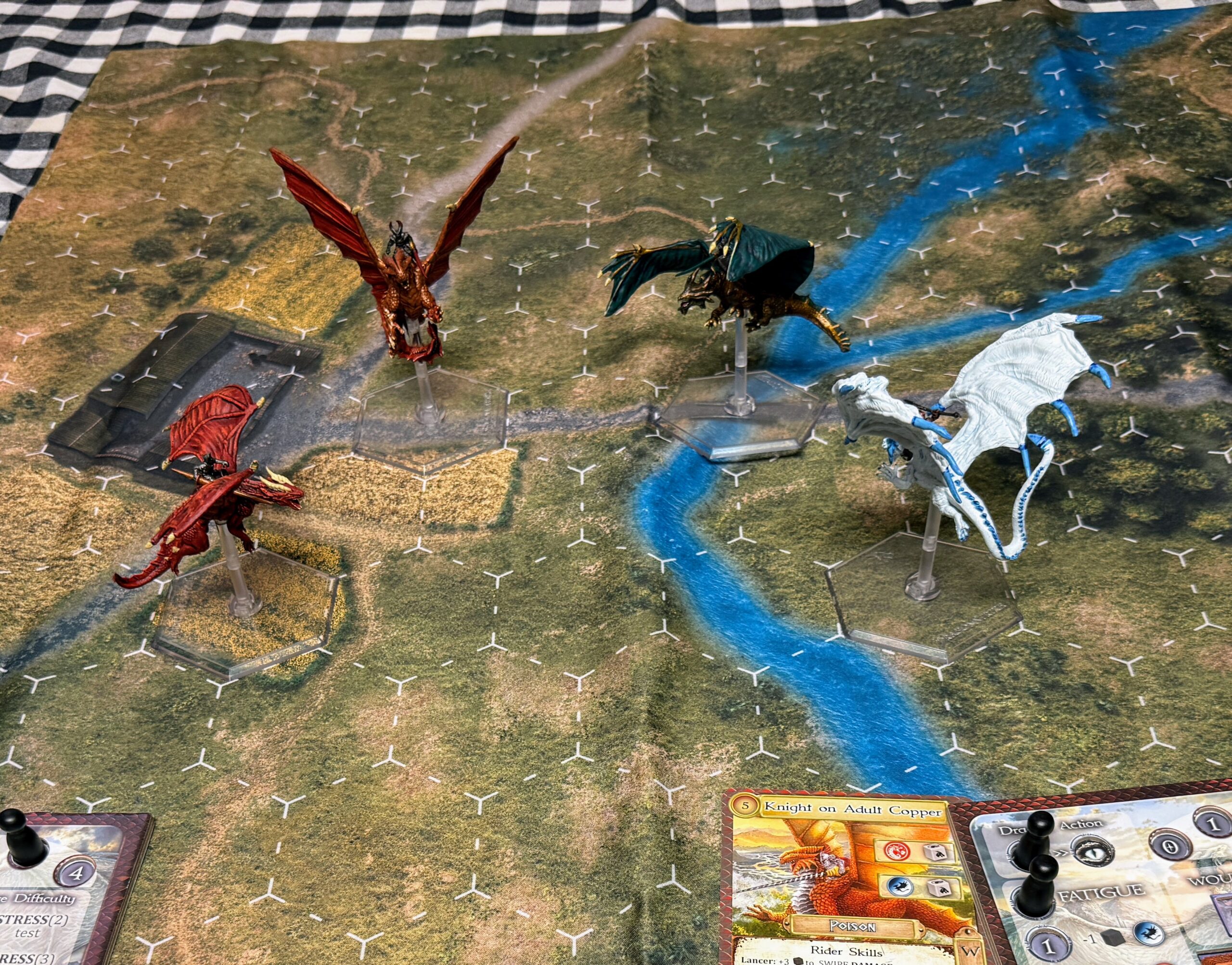
The core DragonStrike game comes with four pre-painted dragons and riders, a large neoprene battle map, four three-layer player boards, decks of maneuver cards, tiles to set up different scenarios, and a set of five “dragon dice”, some number of which are rolled to pass various attack and defense checks, among other things. Your dragon and your knight can modify how many dice are rolled, and the condition of your dragon affects the number as well.
The game supports 2-4 players, with players doubling up on dragons as necessary. There are two “chromatic dragons”, red and white, and two “metallic dragons”, silver and bronze. These dragons are set against each other. The first team to completely defeat the other team wins. If neither team were completely eliminated before the total number of moves the scenario allows, then the one who eliminated more of the other side wins. If there is still a tie, then the side that drew first blood wins. If nobody took any damage during the entire game, both sides lose.
The dragon boards show the dragon’s condition — wounds, speed, fatigue and so on. Speed affects how the maneuvers (selected in secret at the start of each round) play out. Fatigue can rise or fall based on the maneuver chosen. If, after the maneuvers are revealed and executed, a dragon is in range to be attacked by another dragon, combat plays out. Otherwise, a rider can choose a non-combat action, use items, etc.
The game rules seem fairly simple, but I don’t want to really get into the gameplay until we’ve actually played a game.
Here’s a video of one of the creators demonstrating the game on Tabletop Simulator.