The elevator pitch for Dominus Automa intrigued me a bit. An MMO where you didn’t directly control your player character, who would happily quest, craft and grind levels for you even if you weren’t online?
These sorts of MMOs aren’t entirely unknown — heck, I’ve been playing one of them for over fifteen years. (And yes, Godville is a true MMO; you interact and play with real players in real time). Dominus Automa goes an extra step, with Neverwinter Nights-style graphics and a Final Fantasy 12-style customization system that lets you determine the conditions for when skills and spells will be used, and against which sorts of enemies.
All that is in the future. What Dominus Automa is today is a single player speed run through the fourteen levels of the game comprised of largely purchased assets. That’s not a dig; one of my favorite “MMO-lite” games, Erenshor, was built to some extent with purchased assets and is tons of fun.
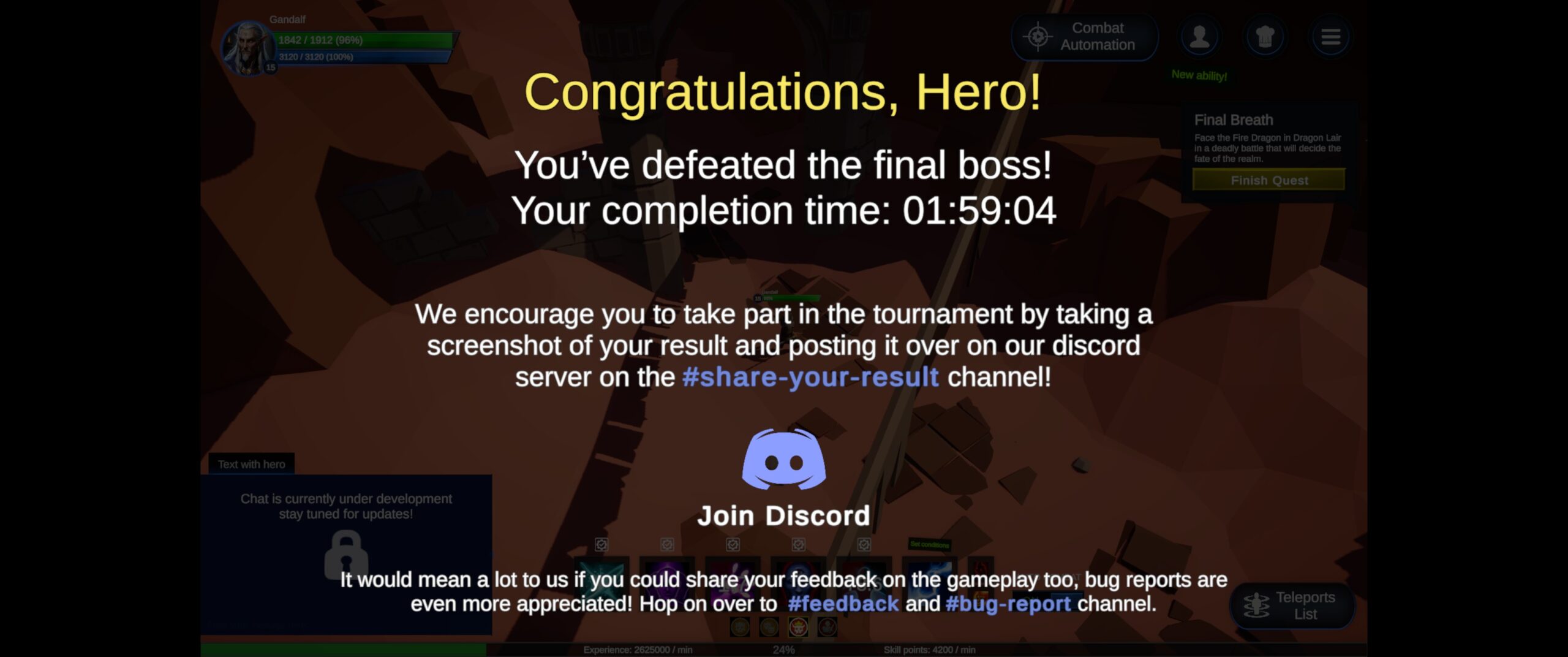
The game is currently on an invite-only status on Steam; to get a key, join the Discord and DM the admin for a Steam key. I’m not sure for how long that Discord link will be active.
Currently the game isn’t online, doesn’t let you save your character, and you can’t have a conversation with your character, either through texting or in game. What can you do?
What they’ve implemented here are the basics of many systems, and those systems are pretty fun.
Currently, you start the game with a simulated login screen that puts you in command of a new level 1 mage, Gandalf. Gandalf is immediately invited to take on a quest to kill skeletons. He teleports to the skeletons and begins blasting away with his free magic missile auto-attack. As helpless skeletons die, Gandalf gains his first two spells — a fireball spell and a fire resistance debuff spell. When he’s done with the quest, the game invites you to finish the quest by automatically teleporting back to town and hunting down the quest giver.
You can then sell your loot and buy gear upgrades. No, you can’t.
There is currently no loot or inventory in the game. I’m not sure gear is going to be part of this game, though I would hope so. I also imagine that we’ll be able to design our own character at some point, but right now we’re all going to be Gandalf, and the only future player character model currently in the game is a dwarf with a significantly different art style, who does his best to kill you whenever he shows up. Because PvP is a thing.
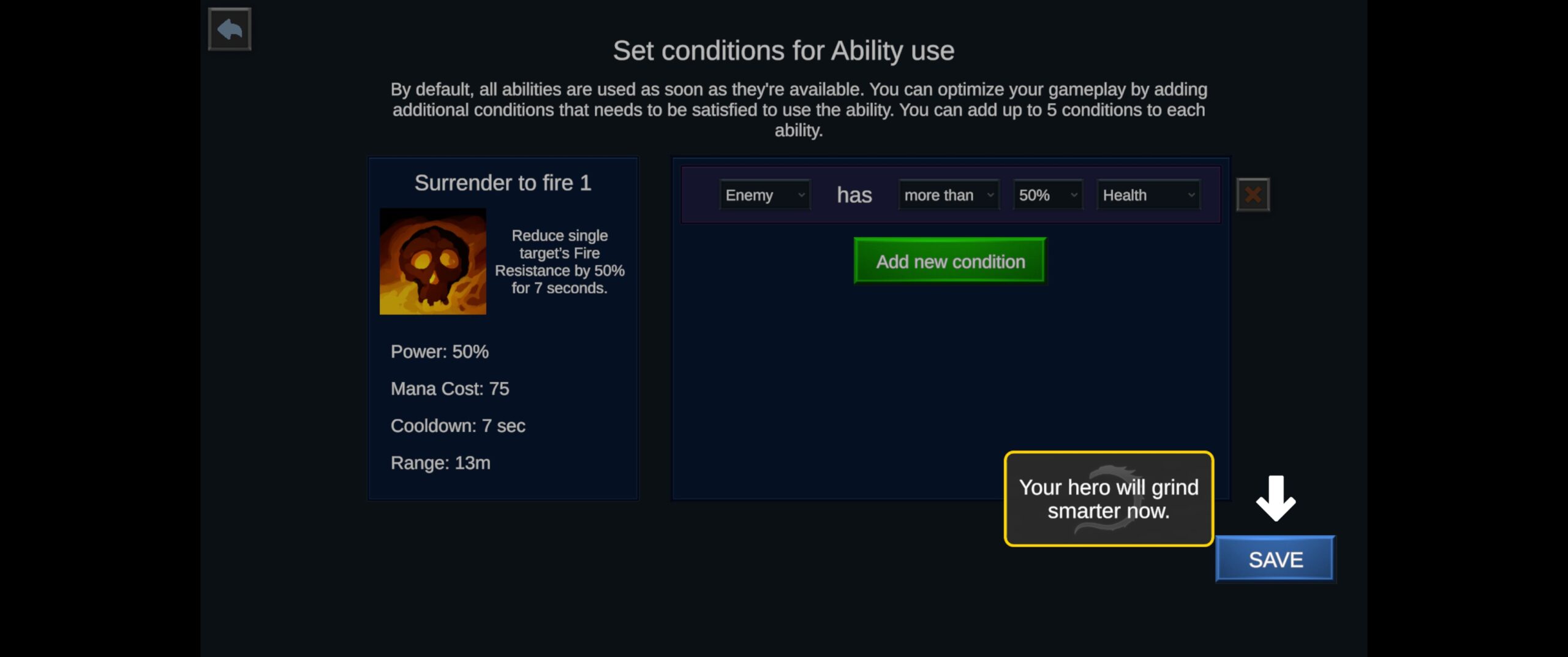
(I thought I’d taken better screenshots, but here we are).
Central to your character’s strategy is the ability customization screen. There are four different types of enemies — solo enemies, group enemies, boss enemies and other players. You can define a loadout for each of these, and the game will select the appropriate one depending upon your current target. Your PC currently always attacks the closest enemy.
Within each loadout, spells are cast in order from left to right as soon as they are off cooldown and you have sufficient mana to cast them. Each slot can have several conditions applied to them — based off your or enemy health or mana, how many enemies you’re facing, or how far away enemies are from you.
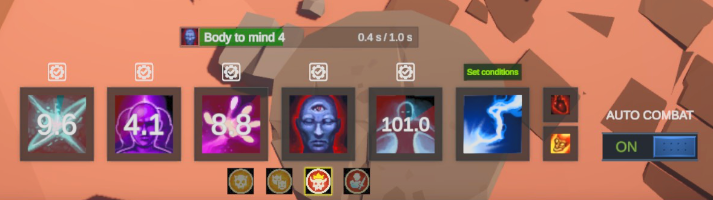
As an example, the final boss, a dragon. The dragon is absolutely immune to fire attacks, so you don’t see any here. My one attack is the lightning attack at the end.
First up is the heal, that fires when my character’s help is below 50%. Next is Overpower, which is a 50% boost to magic attack damage, and that only goes off when mana is above 50%, as when below, I want to focus on having mana for attacks. Third up is a vampiric physical attack that fires only when health is below 80%, as there’s no need to do life steal when health is full. Fourth is a spell that trades health for mana; this fires only when health is high and mana is low. Fifth is a straight mana regen that fires when mana is low.
Next to the ability bar are two smaller icons representing passive skills — the top is a magical and physical attack buff at the cost of physical defense. I didn’t expect the dragon would attack me physically. The lower one is a fire resistance buff.
Last is the Auto Combat switch. Turn it off and the character doesn’t fight.
At the bottom, the four icons show that the boss loadout is currently selected.
There’s only six slots for loaded abilities from a much longer selection. In game, each quest brings you to a place with one sort of creature, so you’ll want to make loadouts and triggers specific for the enemy you’re facing. For instance, there’s a “blink” spell that can fire when enemies get too close, spells specific to groups of mobs, spells that gain power when the character has lost health. There’s going to be preferred loadouts for quests.
There’s also crafting, of a sort. Some levels feature plants to harvest, and in town you can send your character to the ovens to bake stat-buffing pies. Since there is no inventory, you eat these yummy pies immediately. Don’t face a dragon without a berry pie in your belly.
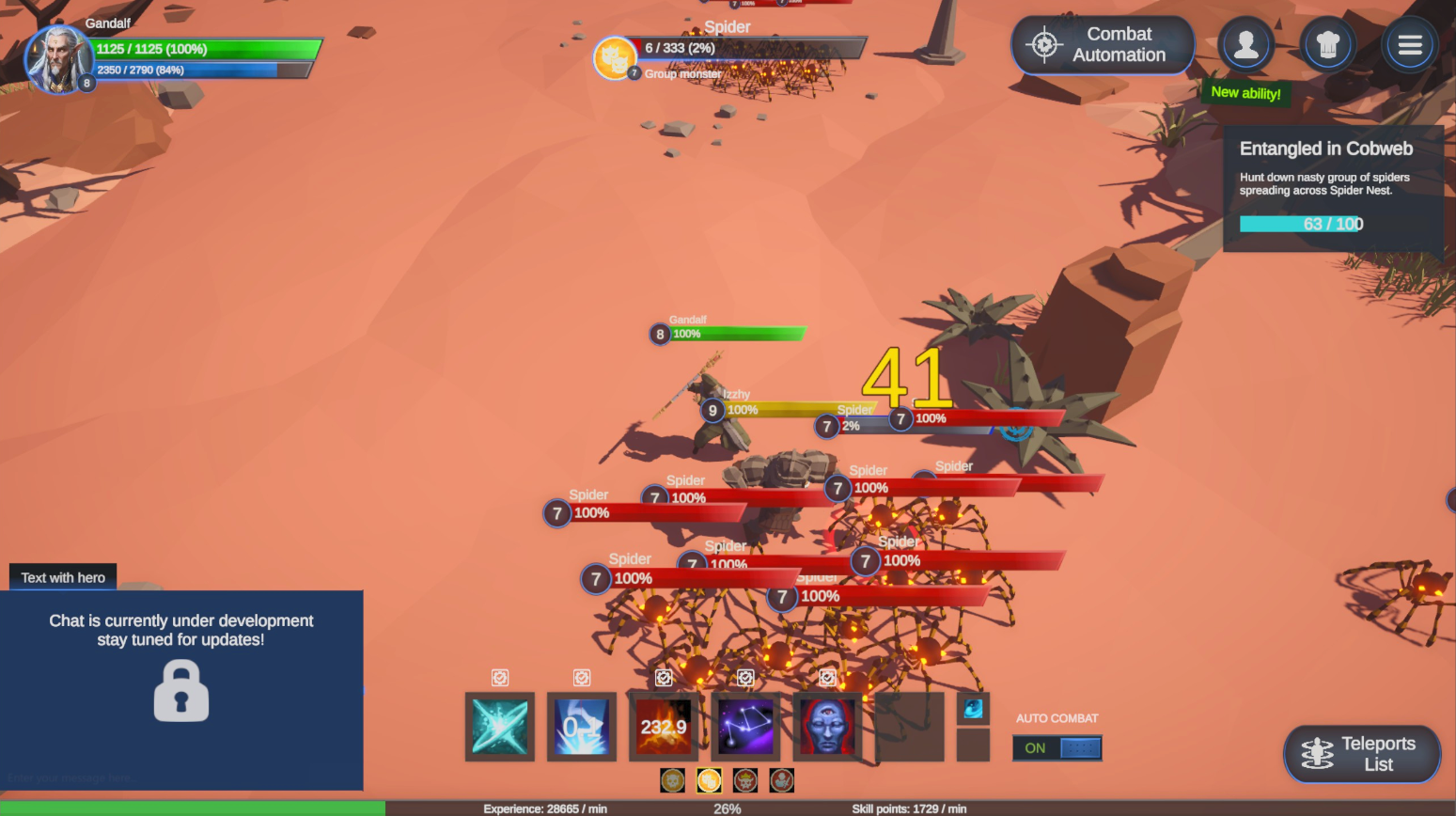
I’m not sure I’ve ever played a game at quite this early in its development, so it’s really hard to predict how it will work when all the features are in. I came in expecting to find other players — I’d have invited other Spodeites to join in, we could group, etc. But multiplayer, character creation or even persistent characters are TBD. Right now, it’s essentially a tech demo, and adding a persistent, multiplayer world to a single player leveling experience is not going to be super easy.
Still, for what it is — get in the game, speedrun to the end boss (which will take you an hour or two), game over — it’s fun enough. I’ve always loved being able to program my characters to do things in games like FF12, the original Baldur’s Gates games and so on. I’m there for that, if nothing else.