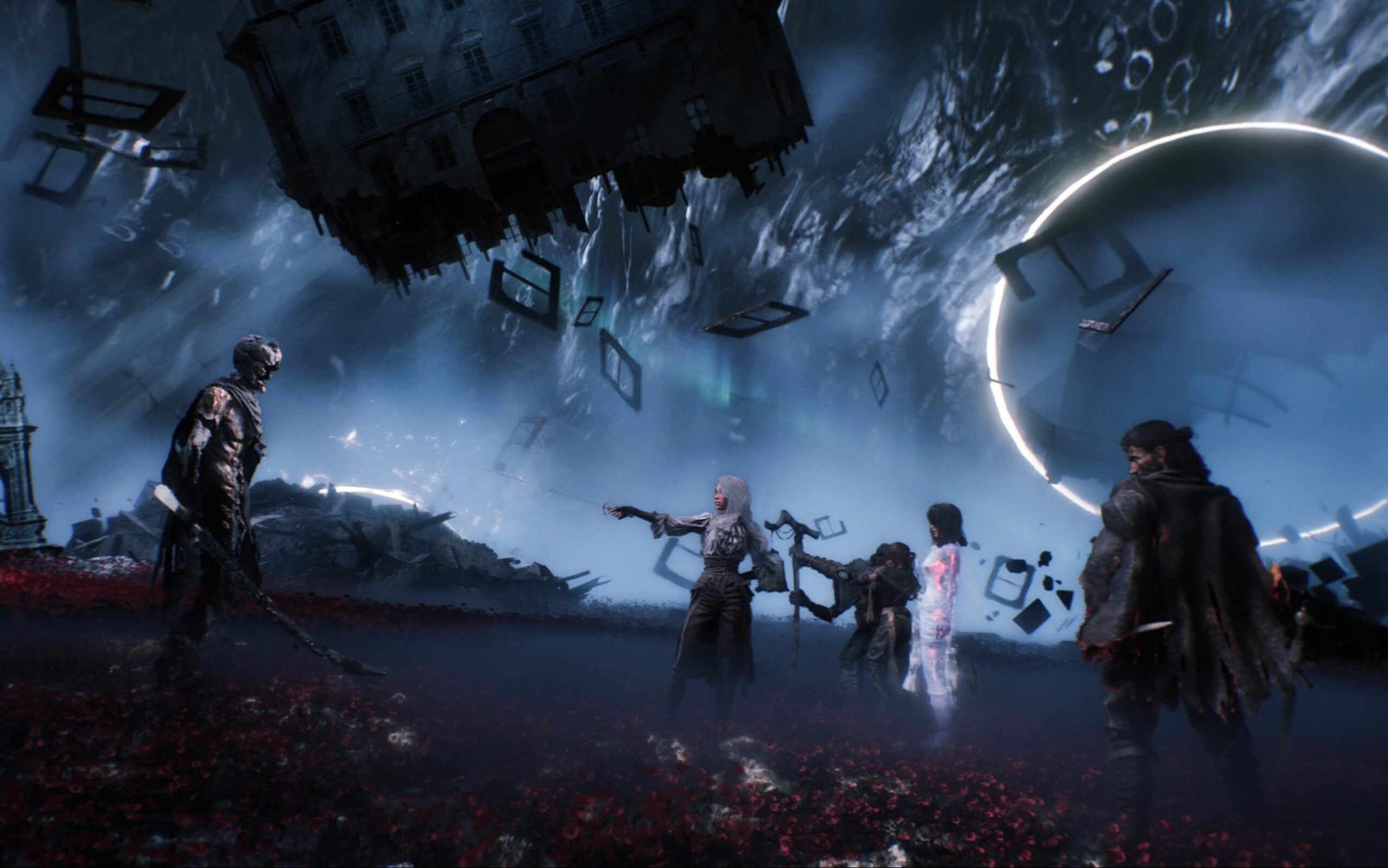
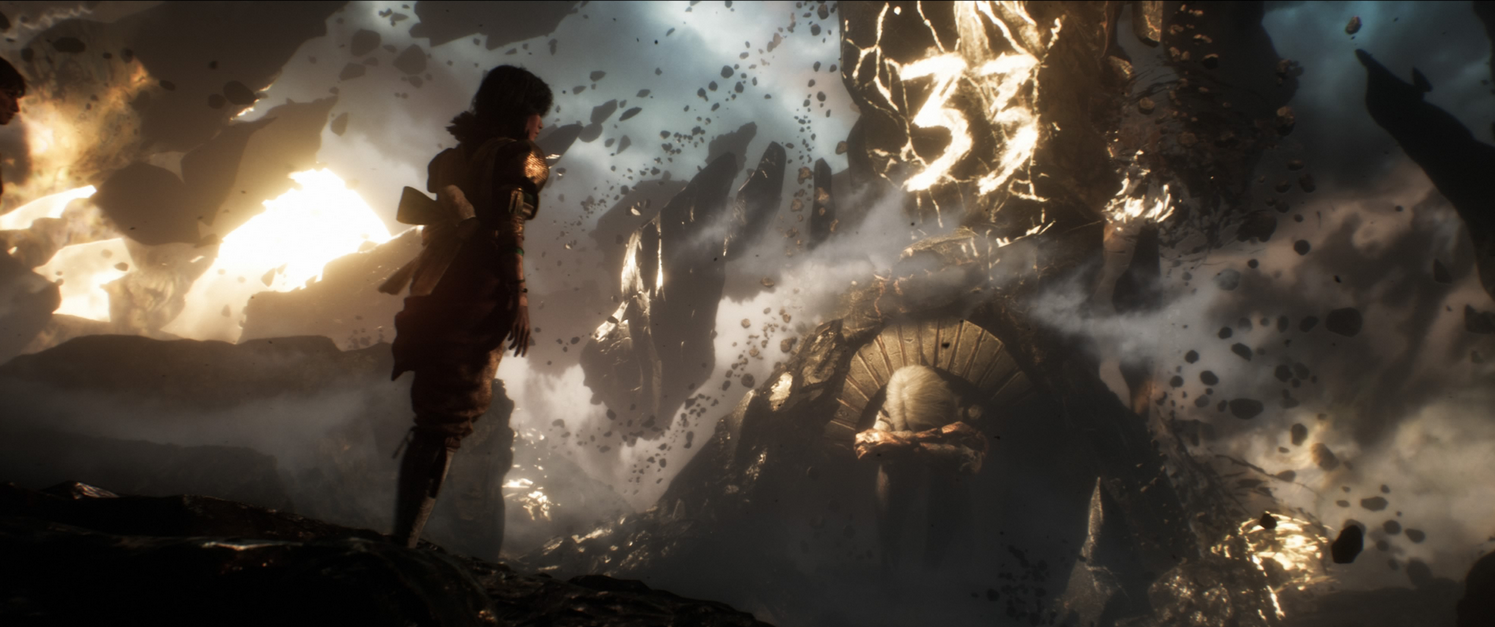
For some reason, 67 years before the events in the story take place, Belle Époque-era Paris is sundered apart in an event called “The Fracture”, and the heart of the city is transported offshore onto a handy island named “Lumière”. Back on the continent, an immense monolith was erected, with the number “100” painted on it. An enormous creature, called “The Paintress”, once a year wakes up, erases the old number, and paints a new number, one lower. Anyone who was that year’s age or older just disappears in a shower of flower petals.
Each year, after this “grommage”, a new expedition is sent to the mainland to find a way to stop the Paintress. No expedition has ever returned. Now the remaining 33 year olds are setting off on an expedition of their own. Expedition 33.
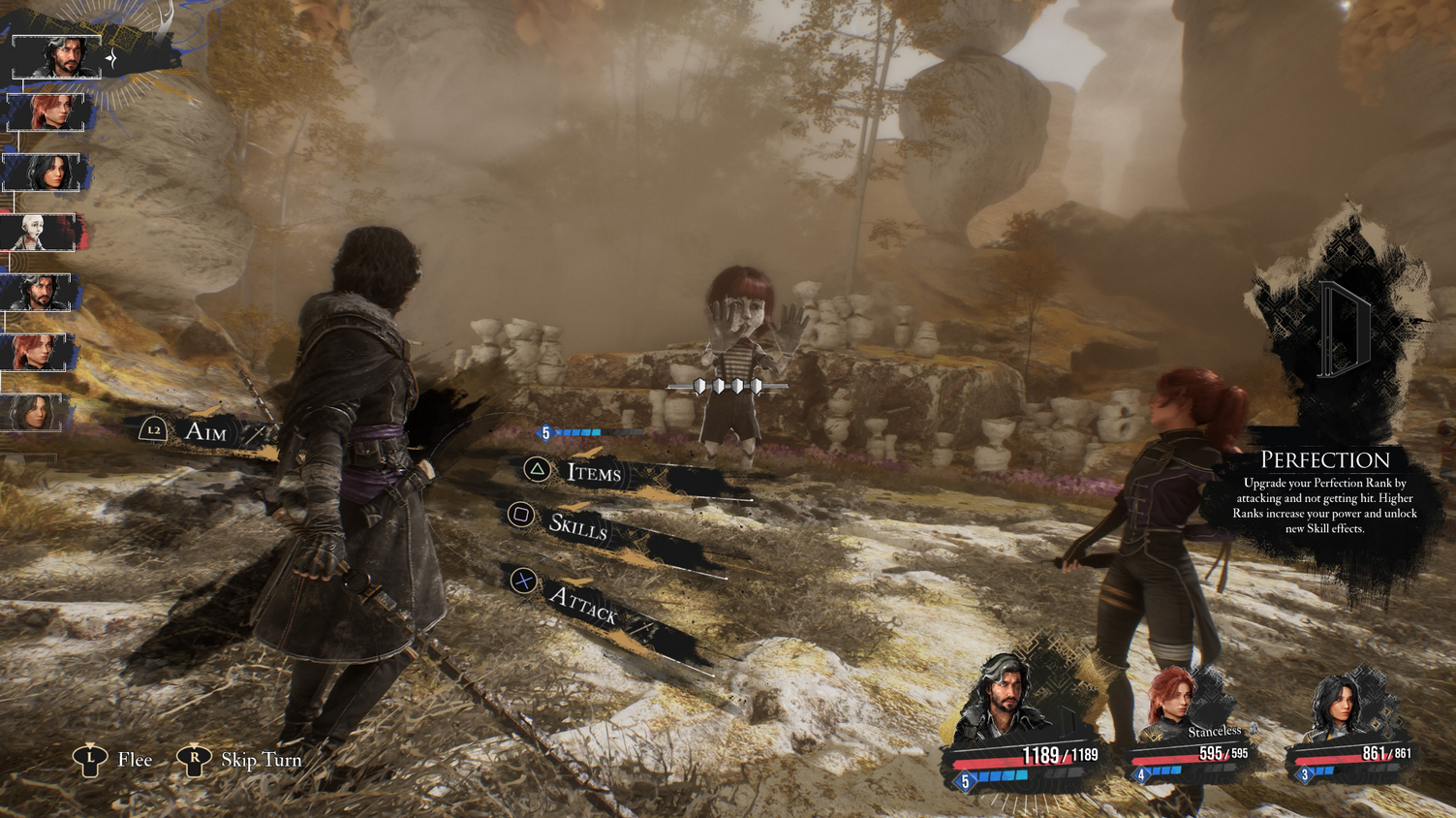
CO:E33 is a turn-based RPG by the French game developers Sandfall Interactive. It plays fairly similarly to the Persona series; you wander about until you see something that wants killing, you run up to it, and your group (maximum of three) attacks in turn.
The twist with CO:E33 is that almost every attack sent your way by an enemy can be dodged or parried. If it’s parried well enough, it will trigger a counterattack that can be more devastating to the enemy than your own regular attacks. Learning to look for the attack “tells” and hit the parry button at the right time are key to enjoying the game. It’s unfortunate that the game is so dependent on it. Sandfall has settings to make the timing easier; setting the difficulty to “Story” and widening the timing window can make it not so impossible to make progress, but you soon settle into a rhythm with them. Look for the tell, wait a fraction of a second, hit the parry button.
One boss mob kept killing two of my three group members over and over but, for some reason, I could handle the parrying with the third one. So, I killed a boss, with my healer, almost entirely through parrying. It took an hour. But I did it.

The game is split into three acts (and a couple of epilogues), and each act ends with Something Surprising That Changes Everything That Came Before.
I didn’t know much about the game, before I started playing, aside from the fact that there was a big twist. That’s the kind of thing I can’t leave alone. This thing happened — was this the twist? Am I missing clues that set up the twist? And so on. I really can’t say anything about it, because it’s a secret, but the ending left open a lot more questions than it answered.
And that was the disappointing part. I think the game would have worked without the twist. That wasn’t the game they were making, though.
It’s only natural to think that one of the characters you’re playing is the “main” character; CO:E33 knows this and plays with it. And to be fair, the game eventually gives you enough hints as to who the main character is that by the time the game says it out loud, it’s not that much of a surprise.
Anyway, I have to stop talking about the plot or I’ll say more than I should.
I love French RPGs. Greedfall, Steelrising, Bonaparte, and so on. They’ve such a continental feel to them that is so very different from the largely Japanese-inspired RPGs that seem more written for children. I was going to point out Baldur’s Gate 3 as a counter-example, but that’s a Belgian game, so there you go. I’m an adult; I want fantasy RPGs for adults.
CO:E33 delivers. The characters struggle with the loss of their parents to the Grommage or previous expeditions. “Everyone in Lumiere is an orphan” is a saying, and parents have children young so they can have as many years of life as possible before the Paintress erases them. Characters sneak off for private time. Traces of previous expeditions cause feelings of loss and despair.
That makes it all the more surprising how calm everyone seems when they reach a true existential crisis. The time between the end of Act 2 and the end of Act 3 was very short. It seemed the developers, having explained the twist, were in a hurry to end the game. I spent some time in one of the the newly available dungeons in Act 3, then figured I’d just end the game and the last few fights weren’t worth the mention; my “stack burning” build (Maelle and Verso stack burning, Sciele supports, hilarity ensues) made short work of every boss. I didn’t even have the best weapons, skills or Pictos according to guides I reluctantly consulted. My weapons weren’t leveled up, my characters weren’t leveled up, but I knew how to stack burning, and I knew how to parry, and that was enough.
There are still mobs that kicked my butt; but the main plot mobs weren’t among them.
So, how was it?
I enjoyed the game. The mechanics of the game were solid. I could have done without the parrying, but I did eventually learn it out of necessity. The characters were great. The story was pretty much just infodumped in Act 3, but once everything was explained, a lot of the weird things you come across in the game made more sense. There are two endings, and it’s not entirely clear which one is the happy ending. There is a NG+ mode, but I am not sure if there is any NG+-specific content.
It’s fun figuring out broken builds. I had one where a character would die at the beginning of each fight, which triggered a powered-up explosion that would usually kill the entire opposing team of trash mobs. And I have some new Pictos that could make that even more fun. Walking around and just auto-killing stuff is fun and great xp!
I loved the game, even with its (subjective) flaws. The game has a wide variety of difficulty settings, so it’s as easy or as hard as you want it to be. The enemy designs are usually pretty fun. All the characters have histories and goals of their own, all had their own reasons for joining the expedition rather than just having the last year of their life spent with friends and family.
I would rate it 8/10.