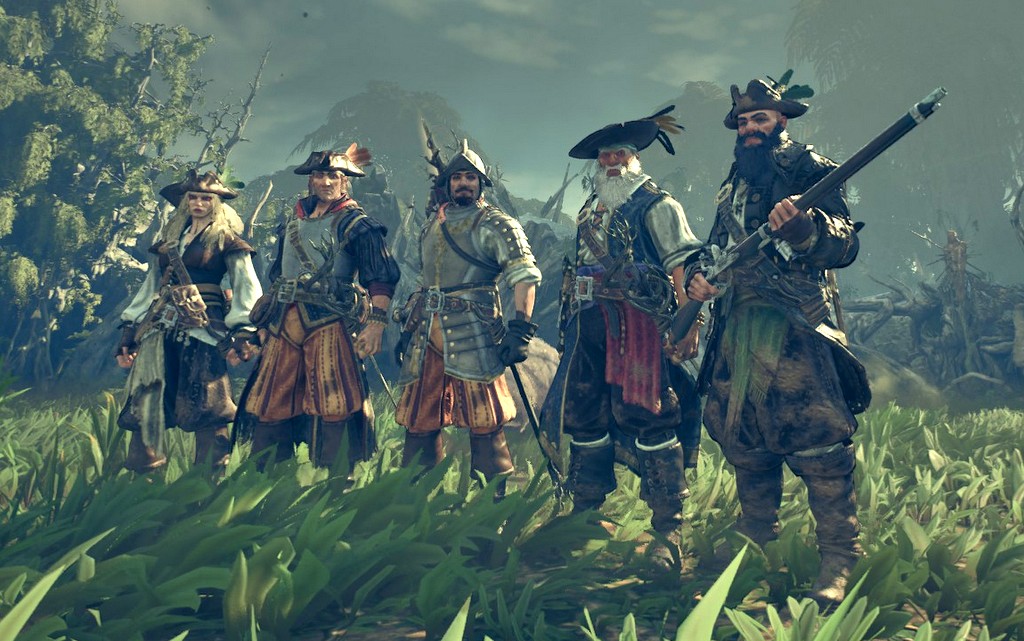
After just playing the demo, I said that Windrose is nothing more, really, than Valheim, but with pirates.
That turned out to be pretty far from the truth. All survival crafting games have pretty much the same bones as any other; you start as a character with nothing, with the entire environment against you, and monsters against whom you have no chance of survival. But soon you’re collecting branches enough to build a hovel, and then you’re toppling bosses, moving to new biomes, and the world is yours.
But Valheim has had an outsized effect on the genre, especially among other PvE games.
There’s a lot of things that Valheim just did right. The crafting and base building is first rate, best I’ve played — and I’ve played Palworld and Minecraft, so I know a little about what’s out there. Taming and breeding animals is fun; being able to breed a squadron of super pigs and take down bosses with weird tactics — that’s all Valheim.
But for all that, Valheim is a dead world — appropriate, I guess, since it is an afterlife of sorts. Nothing really happens without you being there.
In Windrose, there are other people, and normal quests, and factions, and people hunting for you. The world feels a little more alive.
In the end, both games are different enough to both be worth playing.
I could go on and on about how Windrose is and isn’t like Valheim, but I think it’s best illustrated by the boss battles. Valheim has an easy starter boss, and these ramp up to some truly difficult fights. Windrose is tough from the start.
I should be more exact: Windrose is tough from the start, if you have not mastered the dodge and parry dance. A lot of people really don’t like having to watch the fight that closely and react so quickly; the number one complaint I’ve read about Clair Obscur: Expedition 33 is that they don’t like the parry mechanic. Same for the whole souls-like genre.
Good news is, you don’t ever have to parry in Windrose, you can step in, slash a couple of times and jump back. That will carry you through the entire game — no parrying, just move in, slash twice, jump backward. It doesn’t work against ranged enemies, but then, for ranged enemies, neither does parrying.
But if you don’t master parrying, then the first boss fight is going to feel like an endgame boss. The second boss is about dodging, and the third is dodging while shooting, and that’s all the bosses.
Valheim has the “face tanking is fine” deer boss, then the “hide and seek” tree boss, then the poison boss with lots of adds, then the dragon who will tear you up, then the goblin king who throws the sky at you while luring everything in the area to you, then the insect queen, then I dunno what the Ashlands one was because I’ve never made it that far, but I’m guessing it had to be worse than the other critters there, and they were awful. Each boss required different tactics and its own challenges and a lot of preparation besides.
Windrose bosses just require you to have your gear at the correct level and know how to dodge. That’s true of all three of the bosses so far. All three are in an arena so nothing wanders in, all three have no adds, so…
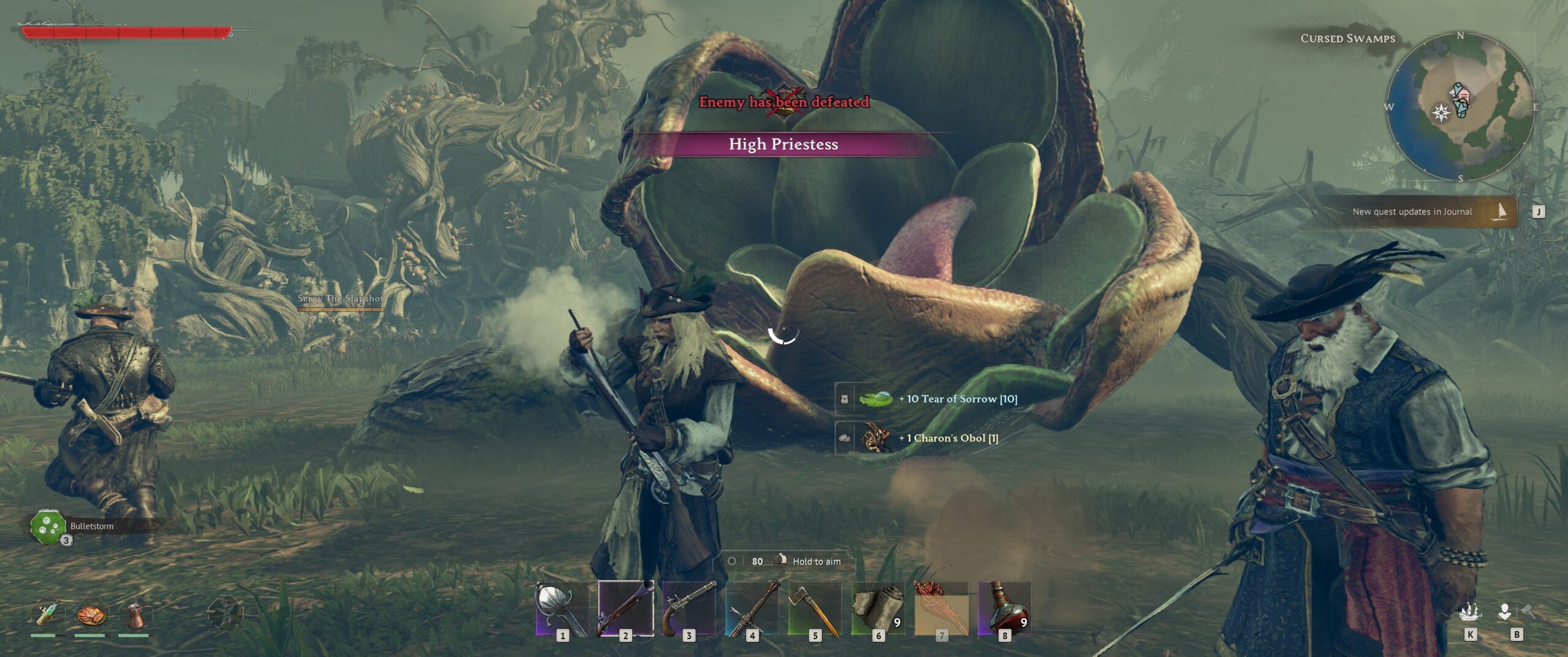
We haven’t been playing much Windrose lately; we’ve all finished gearing up, we were just waiting for a time when all of us could be online at the same time for the swamp boss. We were chatting on the Discord and decided that now was the time. We all logged in, made a lot of ammo, gunpowder and bandages, cooked our own special foods, brewed elixirs, made some bandages, broke out the good healing potions; we were ready.
Fighting our way through that final cursed swamp to the boss was an adventure in and of itself; there were two of the huge Plague Crushers, but I could deal with them with my trusty blunderbuss — I am spec’d for gun damage and blunderbussi in particular. The bigger the enemy, the more damage it takes and the plague crushers are very large.
Since we didn’t have a fast travel bell, we had to sail to the island. I and a couple others made it fine, but Blackbeard sent a fleet to catch the last few, and so while I took out a plague crusher, the rest took down the enemy fleet. We continued in. The boss arena, like the two before it, opened a fast travel point as we arrived. We took that chance to head back to our own bases to heal and stock up once more after the fight to the arena, and then we started the fight.
And then we stopped it, because Stingite died to something, I don’t know what. So we all put ourselves in the path of the giant pustulous frog plant, took the “L”, ate and drank and headed back in. And we did it, on our first real try, because by now, all of us are excellent at dodging and running away and shooting guns. There were five of us, so we traded aggro and shot when we weren’t being chased, and did big damage when we’d staggered her. It took no more than ten minutes, and when it was over — we were done. I’m not sure it’s even been a month.
So there’s the biggest difference with Valheim — it’s faster. But I think I enjoyed it more. It was fun building faction with the various crews in the Caribbean. It was fun first running from Blackbeard’s fleets, to then hunting them down. Leveling up the ship was a whole second way of progressing and it feels good to broadside an enemy ship and immediately leave them sinking behind you. It took a lot of mining and refining but totally worth it.
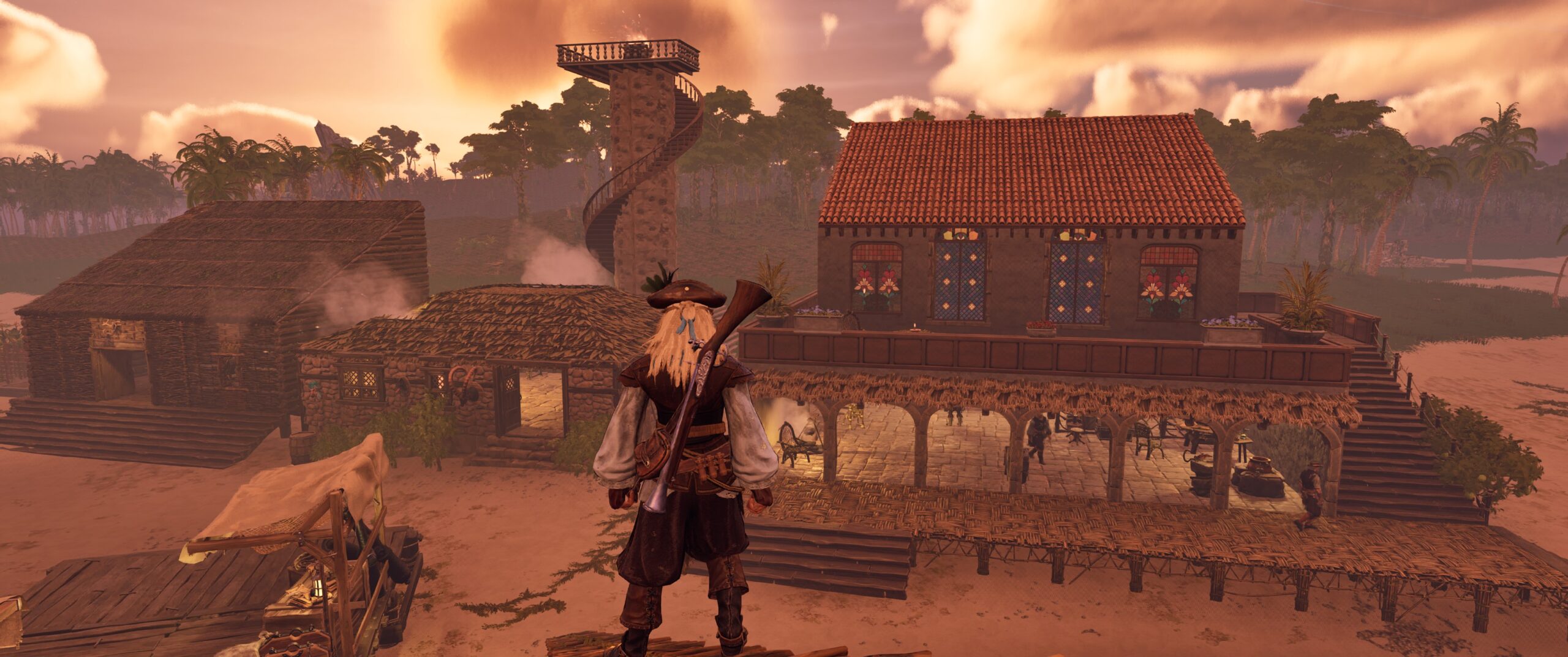
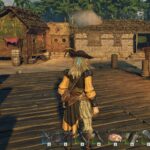
The tools for base design are not quite up to Valheim‘s level, but they aren’t far off. One earns piastre and guineas by finding them in pirate treasure chests, from the pirates themselves, by boarding enemy ships or, most commonly, by killing pirates / sinking ships / finding random flotsam and jetsam and selling it to one of the many factions at their super secret bases that Blackbeard definitely does not know about. Most factions sell at least some plans to make your base a little spiffier, but the best ones are so expensive that you likely won’t be able to afford all of them until you are near the current endgame.
The stick and straw designs are cheap; logs cost a little more, stone more than that, then clay and finally marble, to truly live that plantation owner life you have always wanted. (And: you can hire workers that will lounge around your base and occasionally help you make things! You are the lord or lady of all you survey!).
As in Valheim, you’ll really want to decorate your base, as doing so increases your comfort level. Visiting your, or someone else’s, base gives you a “comfort” buff that increases your stamina regeneration, which is key to being able dodge, parry and fight effectively. (As far as we could tell, the current maximum comfort level is 35, which is great until you come across a random bonfire in the middle of nowhere that sets it back to 1, because comfort levels can be overwritten).
In Valheim, you can start farming pretty much from the start, though you’ll have to go deep into the higher level biomes to get the best stuff. Windrose gates farming behind exploration into the second biome, and the best seeds are guarded by pirates, wolves and goats, so the simple act of trying to grow stuff to eat requires putting your life at risk. Food in Valheim gives you a variety of buffs; in Windrose, prepared meals typically shore up stats, turning them into integral parts of your build.
In the end, the differences between Valheim and Windrose go far deeper than the setting. Valheim is very much more a survival game, with base raids, environments that actively look to kill you, and monsters that will test you severely. Windrose is more of an RPG, with stats, builds, factions, skill trees and all that entails.
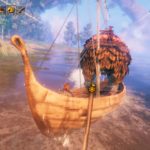
Ocean travel in Valheim is mostly frictionless sailing, bar the occasional sea serpent, leviathan, or the boiling waters of the Ashlands. Windrose offers a vast array of ships with their own leveling path and customizations, and challenging sea battles that make every ocean an excursion a thrill. They’re different games entirely; the one thing I can say for sure is that if you did love Valheim, I think you’re going to like Windrose quite a lot.

1 thought on “Windrose: A Fine Collection of Ne’er-do-Wells”
Comments are closed.