Azura Interactive, the publishers of Willy and Charlie: Solitaire, reached out to me a few days ago and asked if I would like to have a free Steam key to check out their new game, which I believe is to be released worldwide on the 28th.
Well, heck yeah. I have, after all, written my own roguelike Solitaire game, that I plan to implement during next year’s 7DRL roguelike competition. I’m always interested in checking out the competition.
Kasul says Willy and Charlie should be a “sol-lite-taire” game… he also questions how Solitaire can involve more than one player.
Willy and Charlie is developed by WAOWL, a portmanteau of the names of developers WuYiWoYi (design and art) and OWL (programming and QA) and is coming out simultaneously in English and Chinese versions.
I really need to define exactly what this game is, because it is pretty tied into a number of different genres.
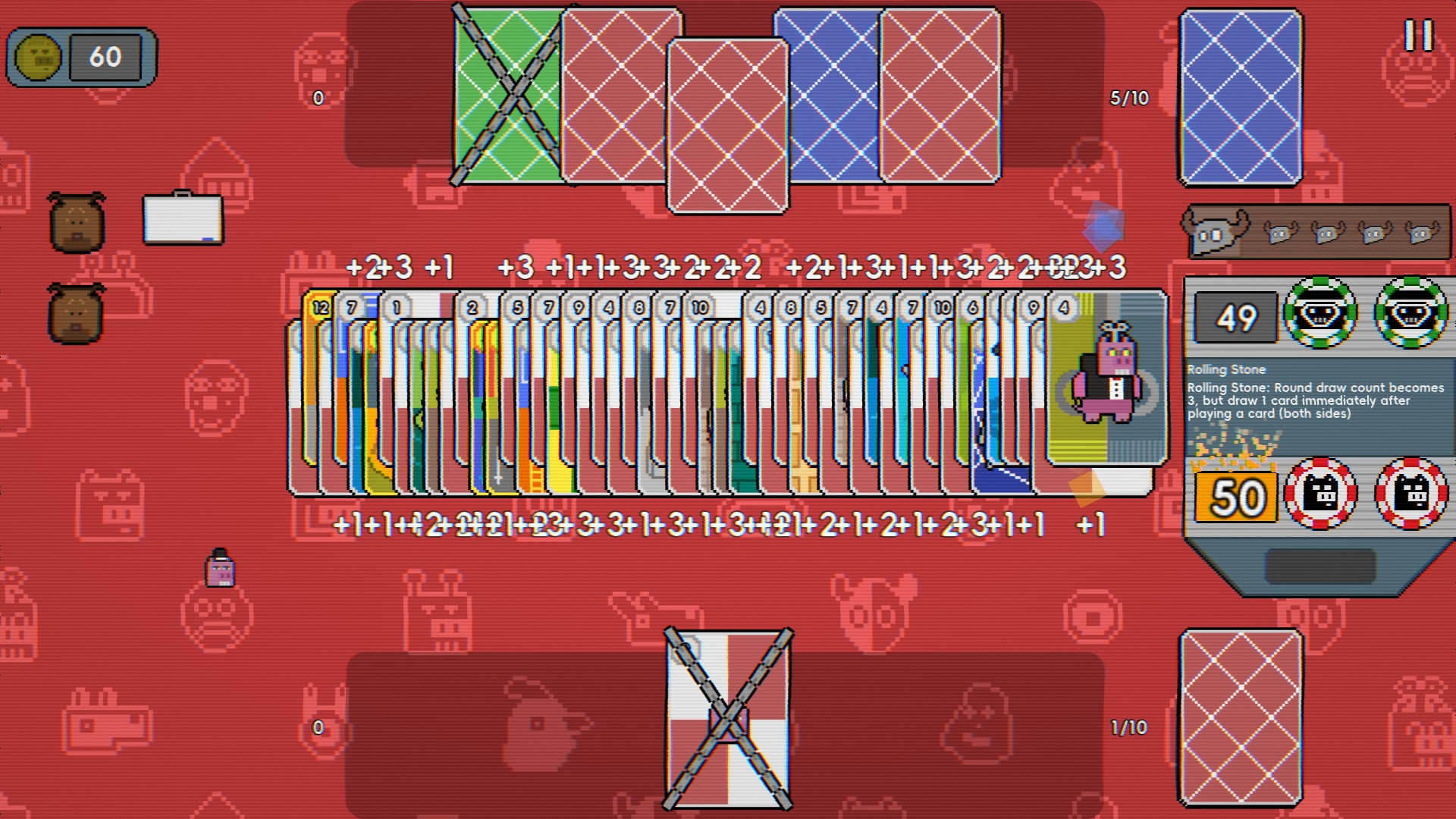
Broadly, it is a head-to-head solitaire game, with you playing against a computer opponent to form chains of cards — cards where the next card played is of higher value than the previous one. A “perfect chain” — where the played card is one rank more than the previous card — is worth extra points. Having to start a new chain is worth fewer. A round ends when both players pass, whether because they are out of cards, wish to save some cards for the next round (unplayed cards carry over), or know they’ve lost this round and don’t want to send good cards after bad. This adds a strategic element to the play.
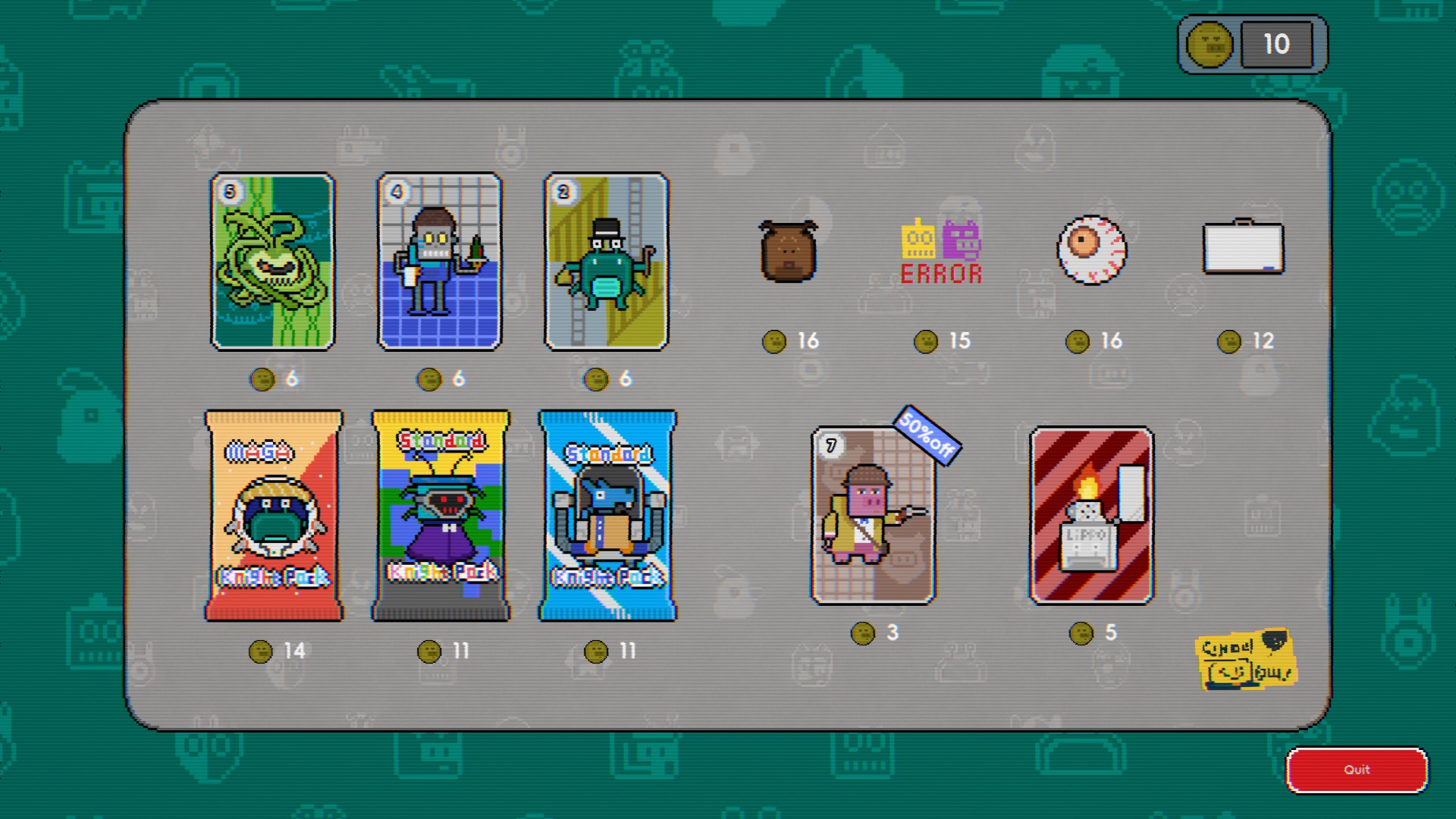
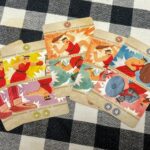
Because this is a deckbuilder, you can on occasion buy new cards with gold obtained by winning rounds. These cards can break the game in fun ways, giving extra points for scoring, or stealing an opponent’s cards. As in Balatro, you can buy single cards or open blind themed packs containing cards from the various factions, like the basic Pig and Rat Alliance, the Athropod Invaders (i.e., fleas… bad Willy…), Mechanical Body, and the Monster Association.
Each of the factions has appropriate special cards for their factions, and there’s something to be said for building your deck from a variety of factions. Got a card you don’t want? You can roll the dice with the Lippo lighter — pay 5 gold and one of you cards is burned. You don’t get to choose.
This is unusual among deck builders; usually you can choose. Typically, your opponent can force bad cards into your deck that you would very much want to get rid of, or, junk cards are crowding out your good cards and you’d like a better chance of drawing the really good cards.
You can also buy (and occasionally win) artifacts, such as a Whiteboard that adds extra points when you’re playing a hand with no special cards, a Flea that gives you an extra point whenever you pass (and this is cumulative!), and so on.
Deciding when and what to buy is almost certainly the second most important decision you’ll make when playing the game. The first most important decision you’ll make is when to hit Pass.
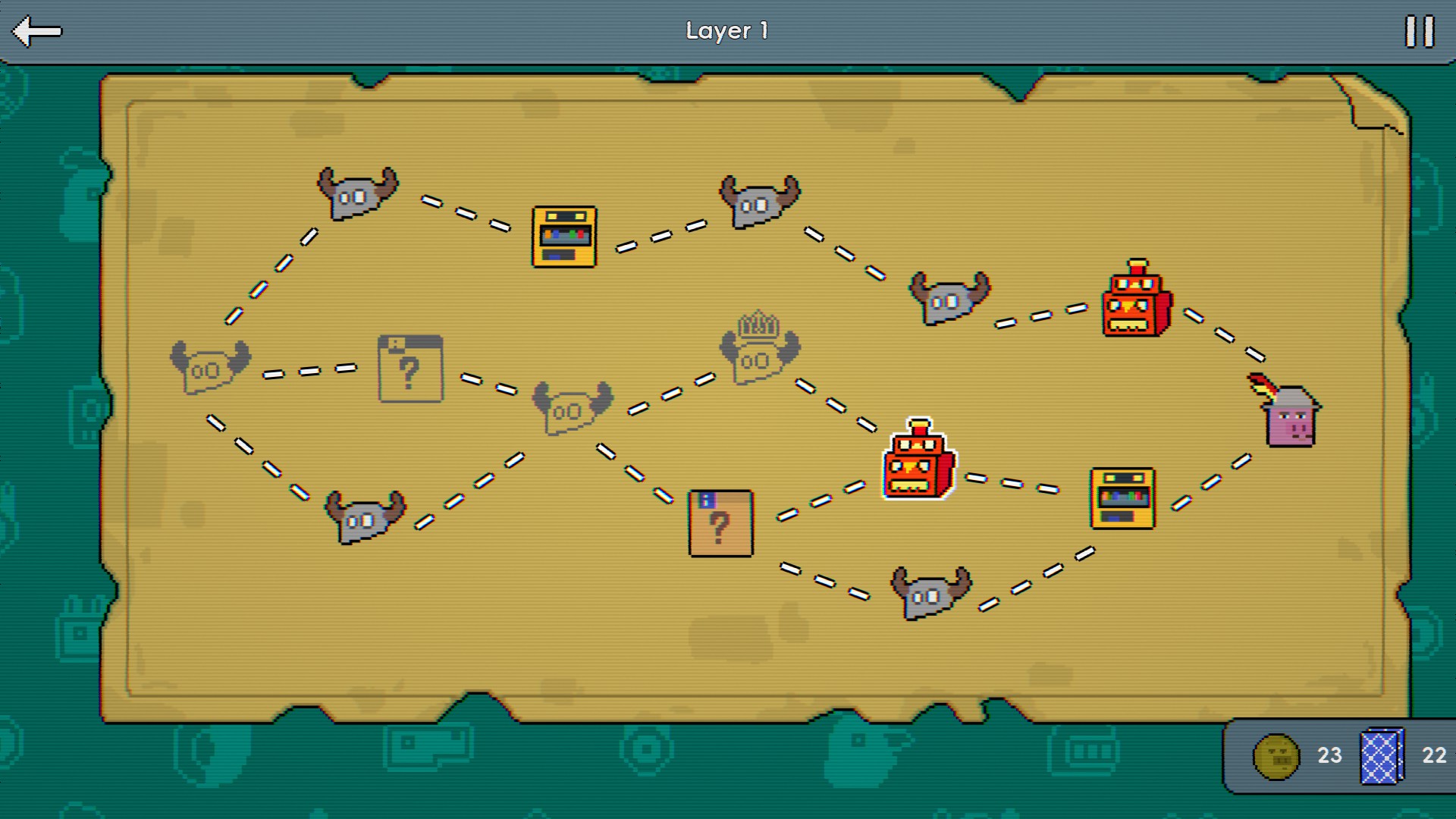
Similar to Slay the Spire, your Willy and Charlie adventure will have you navigate a variety of battles, random events and store segments on the way to meeting the final boss, who always adds a new rule to make the final battle just that much more fun — such as adding junk cards to your hand, granting themselves more cards and so on.
A full game run succeeds when you complete three maps and defeat the final boss. I have to admit that I have not yet won a full game. Those boss battles can be brutal.
Things I Liked
The music was bopping. I guess it was available under a Creative Commons license. The gameplay is pretty quick and engaging, and the sheer number of special cards is a little overwhelming but definitely can enable some pretty devious gameplay when played strategically.
I’d place the difficulty level toward the easy side. Since the main play is “play a card higher than the previous one”, there isn’t a lot of variety in gameplay. It’s not easy to gain a sense for which cards the opponent brings, so it’s hard to play around what the opponent is likely to play; baiting them into playing a card for which you have the perfect chain seems to be the main strategy, but you can also try to exhaust their high cards to allow you to follow up with low card attacks.
It’s strategic, but not impossibly so.
Things I Didn’t Like
I’d have liked the option to choose the card I burned. Unlike other similar games, there’s no real combo building, but I understand the reason. Still, it’s always fun to just tune a deck for combos that will utterly decimate the opponent — that doesn’t happen here.
Thing I Wanted More Of

Okay. I liked Charlie fine, but Willy is the real star of the show. Given such engaging mascots, I would really have liked to have them as characters in the game — pigs and rats are shown all over the Pig and Rat Alliance faction cards, but I think leaning into the characters (and those of the opponents) would really improve things.
Charlie shows up as the boss of the first map, I think every time. But all you see of him is a crude icon of his head and some text that seems out of character. You have really cute characters. Lean into it a little.
(Taking a second look, I think this is a non-Charlie pig as the boss of the first map. Well, I want Charlie there, I guess).
Willy and Charlie: Solitaire is released on Steam on October 28, 2026 (Chinese version).